Sunday, April 17, 2011

Paella for Mike's birthday...

Saffron
Paella is a Spanish dish that is infused with he delicious but expensive, hand picked stamen of a flower, saffron. Smoked sweet Spanish paprika also adds to the aroma and is also found in the Spanish chorizo that I use in this recipe. Wonderful flavors of  woods and sea are blended to make this a very special one pan meal. The word paella has origins in the Latin word for pan, patella. Today the paella pan is a distinctive shaped cooking vessel that is used to make the dish, Paella.  You could buy the special paella pan, but  just I use my 16 inch saute pan as my paella pan and it works just fine, thank you.


The kids usually get a special dinner for their birthday. This year we are doing "paella mixta" a combo of chicken and seafood. Paella was originally a rice dish from Valencia, Spain made with rabbit, chicken and snails. A seafood paella eventually came about along with a clam, mussels and shrimp base. The "mixed paella" is a combination of proteins, mine is mostly seafood with some chicken. I use skinless thighs cut into chunks.


The rice used for making paella is distinctive as well. A more round shape distinguishes "Bomba" rice from other types. Arborio rice, the Italian rice we use for risotto, will work just as well as the Valenciana Bomba variety, which is harder to find unless you go to ethnic grocery stores. The variety I
used in this recipe is labeled "Valencia style".


Valencia rice, Spanish chorizo and the most expensive ingredient, Saffron.
Fresh seafood rules the day with this dish, if you are going to put in he effort, you should try for the freshest ingredients, the only thing I use that is frozen is the peas.

Gather your ingredients:

5 cups simmering chicken stock
1 large onion diced
4 cloves garlic, mashed
Fresh rosemary
2 plum tomatoes, diced 
1/2 teaspoon saffron
2 teaspoons smoked sweet Spanish paprika
5 strips roasted red pepper
1 Spanish chorizo large diced (Spanish, not Mexican, there's a big difference!)
4 chicken thighs cut into chunks
1 lb. cod, cut into 2" portions
6 live clams, scrubbed
12 live mussels scrubbed and de-bearded
6 to 12 shrimp or prawns deveined
6 - 2" pieces of firm white fleshed fish (cod)
4 small lobster tails split lengthwise
4 cups bomba rice
sea salt and fresh ground black pepper


Put your saffron in the simmering stock to steep, it will turn the stock a rich yellow tint..


Heat the olive oil, salt and pepper the chicken, add your chicken to the pan to brown. When chicken is browned, remove from pan and set aside.


Add onions, tomato and garlic and saute until onion is opaque, around 5 minutes.


Add the chorizo, cook for another 3 minutes, add the stock and saffron, bring to a simmer.


Return the chicken to the pan and stir in the smoked Spanish paprika
and add the rice. 


Valencian tradition calls for making a cross with the rice in a tribute to Christ.


Stir the rice into the stock and add the cod...


...Add the mussels and clams...
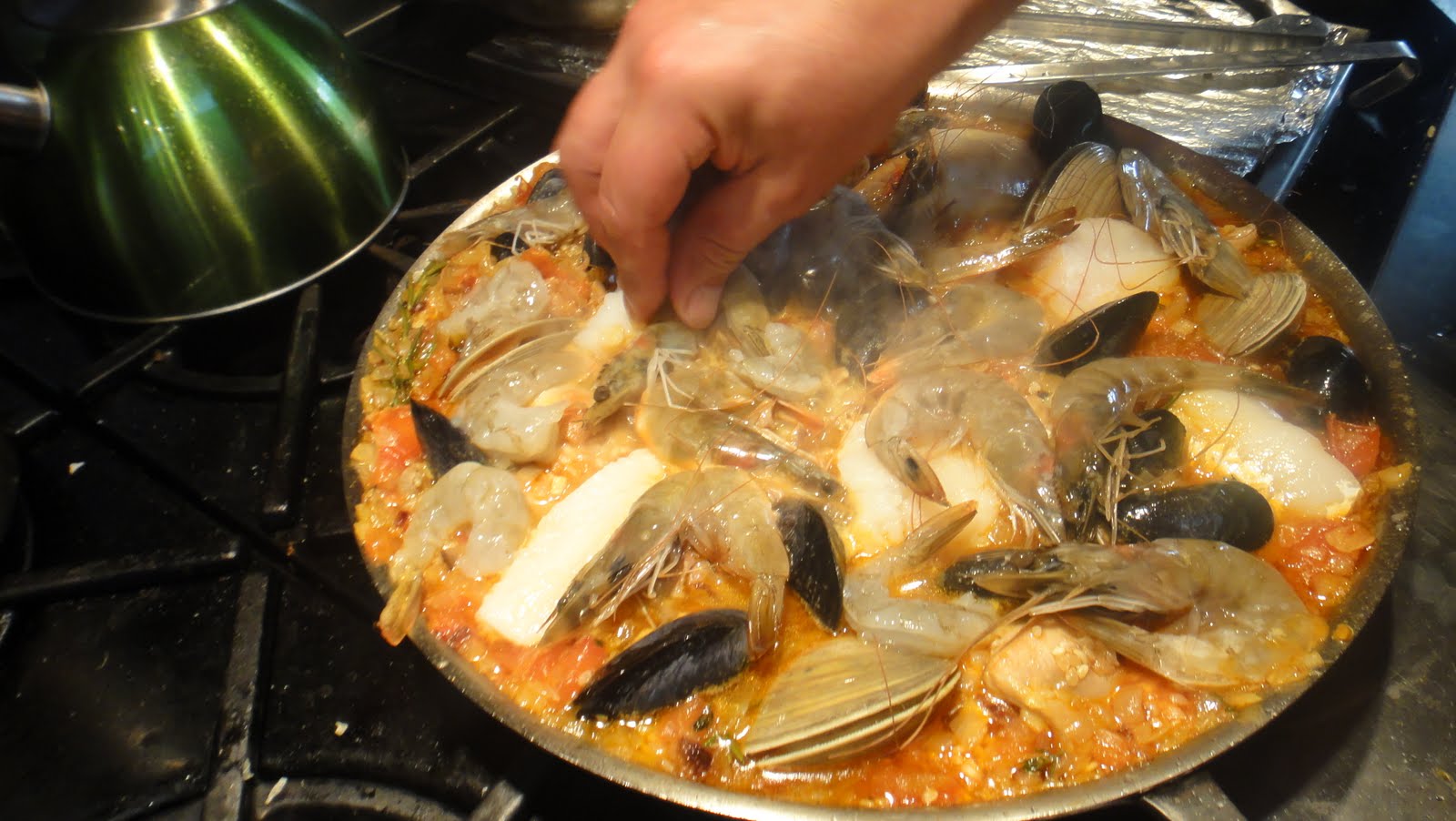

 Add the prawns...


...The peas and sprig of rosemary...


...And the roasted red pepper...

,,,And finally, the lobster tails!

Cook uncovered, gently for about 20 minutes more until clams are open the lobster meat is cooked and the liquid is absorbed by he rice.

You could put the paella in a pre-heated 350° oven for the final cooking. Tradition minded Spaniards cook paella over a wood fire, I use the stove top, but a hot oven will also do the job..

¡Delicioso!

Tuesday, April 5, 2011

Pork Belly

Okay, this is not something that resides in any of my memories from days past, but after tasting pork belly, it is now in there.  Pork belly is the cut of the pig that gets cured and turned into bacon. But pork belly before the smoking or salt-curing is a really fatty piece of flesh that needs special treatment to become the succulent delicious treat it is destined to be.

This cut of meat must render away as much of the fat as possible, similar to cooking duck..   I brine the pork belly for a day and a half, in a water and sea salt solution of 1/4 c. salt to 2 c, water.


When ready to cook the pork, pre-heat the oven to 350º.  First thing I do is score the skin, cutting hatch marks and making sure not to cut into the meat. Add a bit of fresh ground pepper on all sides of the meat.


Next, dice celery onion and carrot, (this is called a mirepoix in kitchen vernacular,) you'll need enough to cover the bottom  of a shallow baking dish with 1/2 cup chicken stock.

Place the pork belly skin side up on the mirepoix and cook  uncovered in the oven for about twenty minutes. At the end of twenty minutes, turn down the heat to 200º and cook at this lower temperature for 4 hours.

Remove the pork belly and allow to rest. pour the mirepoix ino a sieve and drain off as much of the fat as you can.  Meanwhile heat a bit of peanut oil in a frying pan and when the oil starts to shimmer place the pork skin side down into the hot oil to crisp up the skin.


The skin will turn bubbly and crunchy like the pork rind you can buy at the truck stops on the interstate highway. Slice into chunks and serve with the mirepoix. This is some tasty puerco, my friends.

Saturday, April 2, 2011

Chayote???

Yesterday, The Lovely Andrea came home from the store, as she does from time to time, with an ingredient I had never cooked before. She presented me with 3 chayote squash and challenged me to cook them.

I had never cooked this vegetable before, so I started to do some research. It seems like most recipes make a soup or include it in a salad. I wanted to actually cook it and NOT put it in a soup, so I ended up boiling and peeling the chayote, then baking the squash with roasted vegetables, eggs, cream, jalepeño, and cheese. It was a nice vegetarian dish that my family dug into with gusto.


Chayote asada y coliflor con huevos en el queso
Ingredients:
3 chayote, cut in half
2 cups cauliflower florets
1 shallot quartered
1 onion quarteded
1 large jalepeño diced
1/2 cup cream, half and half or whole milk
3 eggs
1/4 cup oilive oil
2 cups shredded Monterey Jack and Cheddar mix
3/4 cup Mexican crumbly cheese
flour tortillas
1 cup iceberg lettuce chiffonade
1 tomato diced
salt & pepper
salsa

Pre-heat oven to 350º
Bring a pot of water to boil, add he chayote and cook for 20 minutes until tender.

Meanwhile rub the other veggies (except jalepeño) with olive oil, salt & pepper, and roast in the oven around 20 minutes, until lightly browned.


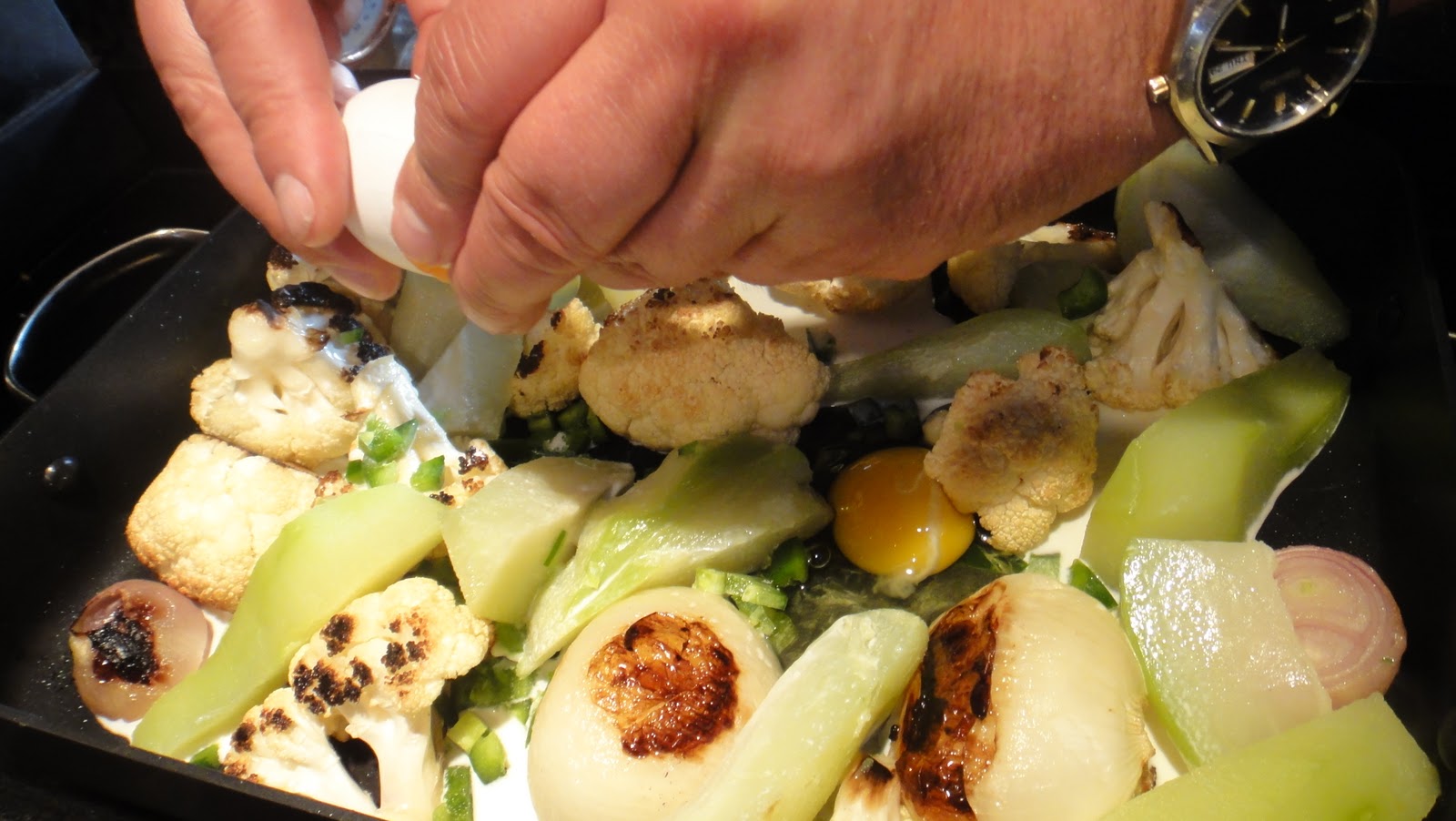
When chayote are tender, peel and quarter them and add to pan with the roasted vegetables. pour cream over the vegetables, crack the eggs and drop them into the pan, add a dash of salt and pepper,


Cover with the cheese mixture and finally the crumbly cheese, and bake for an additional 10 minutes or until the cheese is bubbly and starting to brown. The crumbly cheese does not melt like the other cheese so it should be the final ingredient, it adds a nice texture to the topping.


I served the dish with a lightly toasted flour tortilla, (toasted on my griddle,) topped with iceberg lettuce chiffonade and chopped tomato... and salsa.

A pretty tasty dish, I'll definitely cook chayote again.

Sunday, March 27, 2011

Cavatelli Pasta

Cavatelli pasta is a funny little caterpillar shaped noodle that is great with quick, fresh sauces. My son Mike gave me a cavetelli maker  for Christmas and I really enjoy the way it churns out these little gems. 
I made the cavatelli two ways, with cherry tomatoes and ricotta cheese and another dish made with hot Italian sausage and a browned butter sage sauce, both were were great tasting.

Cavatelli pasta recipe...  serves 4
1 cup flour
1/2 cup water
1/2 teaspoon salt
1/2 cup ricotta cheese

Pile the flour right on your clean counter. Form a well in the flour, add the ricotta  then the water and salt. Carefully stir with a fork, slowly incorporating the flour a little at a time until the mixture is formed into a dough. If the mixture is too sticky to handle you may need additional flour. 


         Knead the dough until it is pliable and springs back when you press it with your finger. 


Form the dough into a rectangle one inch wide and a quarter inch thick, feed through the machine that is clamped to your kitchen counter or table. If you don't have a machine you can form the cavetelli by rolling into skinny ropes and cutting one inch long pieces, at this point you could use your fingers to press them into shape or use a flat tool to drag them into shape.  To make the pasta by hand roll the dough out into a flat disk cut a strip and roll it into a rope,  while you work with one, cover the rest with a clean, cloth kitchen towel...


Buying a cavatelli machine is probably the faster way to go... 


Cook the pasta until it is past the al dente point, these little guys should be soft enough to readily absorb the flavors of your sauce. I found that if they are cooked to al dente there are some that undercooked in the batch. At least in the batches I have made.

I made a quick sauce with cherry tomatoes, garlic, olive oil, ricotta cheese and fresh herbs. It was light and tasty. The cavatelli soak up the sauce and, of course, you'll want to add a bit of grated Pecorino Romano.  


The other dish I made was even better...

This recipe is from The Frankies Spuntino Kitchen Companion and Cooking Manual, which is a book that I highly recommend. 

Cavatelli with Sausage and Sage Browned Butter

Ingredients:

1 pound hot Italian pork sausage (4 to 6 links depending on the size of the sausage)
7 tablespoons unsalted butter
8-10 sage leaves
freshly ground white pepper
ricotta cavatelli (double the recipe above)
1 cup grated Pecorino Romano
½ cup flat-leaf parsley leaves, coarsely chopped

Directions:

Put a large pot of water on to boil and salt it well.
Meanwhile, put the sausage into your widest saute pan with ½ of water and turn the heat to medium. After 10 minutes, flip the sausages over and simmer the for another 5 minutes (replenish the water if it threatens to boil off). After 15 minutes, the sausages should be firm and cooked through. Remove the sausages to a cutting board (discard the water) and slice them into coins just shy of ½ inch. (You can do this an hour or even a day ahead of time if you like.)

Add 1 tablespoon of the butter to the pan and turn the heat to medium-high. After a minute, add the sausage coins in an even layer and let them cook, untouched, unstirred, unfussed with, until they’re deeply browned on the first side. (If there’s not enough room to brown all the sausage in one pan — which there will very probably not be — split it between two pans or brown it in two batches and use as additional tablespoon of butter.) Flip and brown them on the B side. The browning is integral to the ultimate depth of flavor of the finished dish — don’t stint on it. When the sausage is browned, remove it from the pan (a plate lined with paper towels is a nice place to hold it) and return the pan to the burner.

Keep the heat at medium-high and add the sage, the remaining 6 tablespoons of butter, and a few twists of white pepper. Stire the butter and scrape the browned bits on the bottom of the pan with a wooden spoon. After a minute or two, it should stop foaming and start to take on color. 

That’s when you should drop the ricotta cavatelli into the boiling water. Continue to cook the butter until it’s deeply browned and fragrant, about 4 minutes more, which should be just about how long the cavatelli takes to cook.

Do not drain the cavatelli too thoroughly. The water clinging to the pasta will give the sauce body. Add it to the butter sauce along with the sausage and stir.

Add the cheese, stir again, and portion the cavatelli among several serving plates. Scatter each with a couple of pinches of parsley. Serve immediately.

Mike gives the Cavetelli a taste test.