Tuesday, April 5, 2011

Pork Belly

Okay, this is not something that resides in any of my memories from days past, but after tasting pork belly, it is now in there.  Pork belly is the cut of the pig that gets cured and turned into bacon. But pork belly before the smoking or salt-curing is a really fatty piece of flesh that needs special treatment to become the succulent delicious treat it is destined to be.

This cut of meat must render away as much of the fat as possible, similar to cooking duck..   I brine the pork belly for a day and a half, in a water and sea salt solution of 1/4 c. salt to 2 c, water.


When ready to cook the pork, pre-heat the oven to 350º.  First thing I do is score the skin, cutting hatch marks and making sure not to cut into the meat. Add a bit of fresh ground pepper on all sides of the meat.


Next, dice celery onion and carrot, (this is called a mirepoix in kitchen vernacular,) you'll need enough to cover the bottom  of a shallow baking dish with 1/2 cup chicken stock.

Place the pork belly skin side up on the mirepoix and cook  uncovered in the oven for about twenty minutes. At the end of twenty minutes, turn down the heat to 200º and cook at this lower temperature for 4 hours.

Remove the pork belly and allow to rest. pour the mirepoix ino a sieve and drain off as much of the fat as you can.  Meanwhile heat a bit of peanut oil in a frying pan and when the oil starts to shimmer place the pork skin side down into the hot oil to crisp up the skin.


The skin will turn bubbly and crunchy like the pork rind you can buy at the truck stops on the interstate highway. Slice into chunks and serve with the mirepoix. This is some tasty puerco, my friends.

Saturday, April 2, 2011

Chayote???

Yesterday, The Lovely Andrea came home from the store, as she does from time to time, with an ingredient I had never cooked before. She presented me with 3 chayote squash and challenged me to cook them.

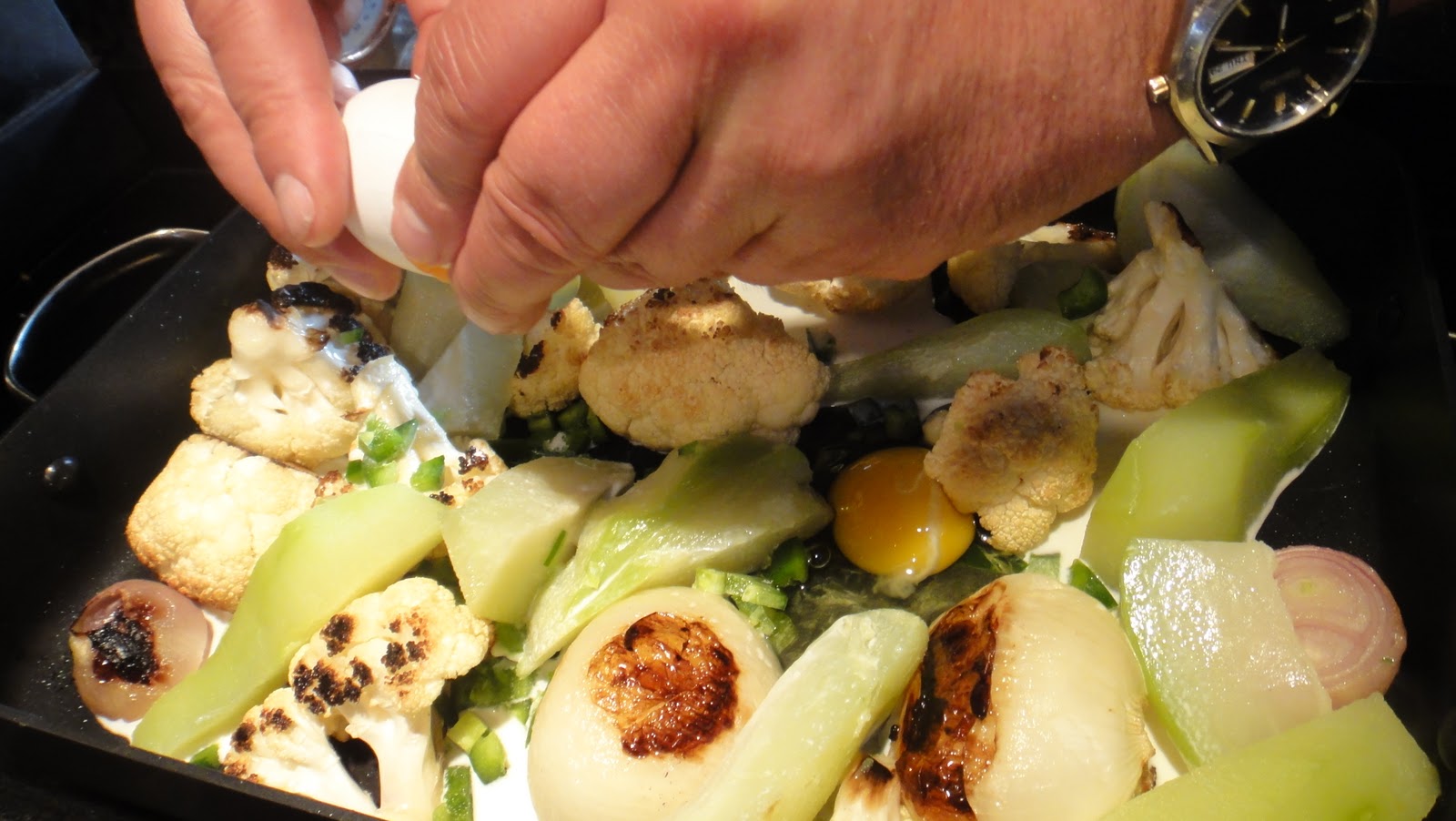
I had never cooked this vegetable before, so I started to do some research. It seems like most recipes make a soup or include it in a salad. I wanted to actually cook it and NOT put it in a soup, so I ended up boiling and peeling the chayote, then baking the squash with roasted vegetables, eggs, cream, jalepeño, and cheese. It was a nice vegetarian dish that my family dug into with gusto.


Chayote asada y coliflor con huevos en el queso
Ingredients:
3 chayote, cut in half
2 cups cauliflower florets
1 shallot quartered
1 onion quarteded
1 large jalepeño diced
1/2 cup cream, half and half or whole milk
3 eggs
1/4 cup oilive oil
2 cups shredded Monterey Jack and Cheddar mix
3/4 cup Mexican crumbly cheese
flour tortillas
1 cup iceberg lettuce chiffonade
1 tomato diced
salt & pepper
salsa

Pre-heat oven to 350º
Bring a pot of water to boil, add he chayote and cook for 20 minutes until tender.

Meanwhile rub the other veggies (except jalepeño) with olive oil, salt & pepper, and roast in the oven around 20 minutes, until lightly browned.


When chayote are tender, peel and quarter them and add to pan with the roasted vegetables. pour cream over the vegetables, crack the eggs and drop them into the pan, add a dash of salt and pepper,


Cover with the cheese mixture and finally the crumbly cheese, and bake for an additional 10 minutes or until the cheese is bubbly and starting to brown. The crumbly cheese does not melt like the other cheese so it should be the final ingredient, it adds a nice texture to the topping.


I served the dish with a lightly toasted flour tortilla, (toasted on my griddle,) topped with iceberg lettuce chiffonade and chopped tomato... and salsa.

A pretty tasty dish, I'll definitely cook chayote again.

Sunday, March 27, 2011

Cavatelli Pasta

Cavatelli pasta is a funny little caterpillar shaped noodle that is great with quick, fresh sauces. My son Mike gave me a cavetelli maker  for Christmas and I really enjoy the way it churns out these little gems. 
I made the cavatelli two ways, with cherry tomatoes and ricotta cheese and another dish made with hot Italian sausage and a browned butter sage sauce, both were were great tasting.

Cavatelli pasta recipe...  serves 4
1 cup flour
1/2 cup water
1/2 teaspoon salt
1/2 cup ricotta cheese

Pile the flour right on your clean counter. Form a well in the flour, add the ricotta  then the water and salt. Carefully stir with a fork, slowly incorporating the flour a little at a time until the mixture is formed into a dough. If the mixture is too sticky to handle you may need additional flour. 


         Knead the dough until it is pliable and springs back when you press it with your finger. 


Form the dough into a rectangle one inch wide and a quarter inch thick, feed through the machine that is clamped to your kitchen counter or table. If you don't have a machine you can form the cavetelli by rolling into skinny ropes and cutting one inch long pieces, at this point you could use your fingers to press them into shape or use a flat tool to drag them into shape.  To make the pasta by hand roll the dough out into a flat disk cut a strip and roll it into a rope,  while you work with one, cover the rest with a clean, cloth kitchen towel...


Buying a cavatelli machine is probably the faster way to go... 


Cook the pasta until it is past the al dente point, these little guys should be soft enough to readily absorb the flavors of your sauce. I found that if they are cooked to al dente there are some that undercooked in the batch. At least in the batches I have made.

I made a quick sauce with cherry tomatoes, garlic, olive oil, ricotta cheese and fresh herbs. It was light and tasty. The cavatelli soak up the sauce and, of course, you'll want to add a bit of grated Pecorino Romano.  


The other dish I made was even better...

This recipe is from The Frankies Spuntino Kitchen Companion and Cooking Manual, which is a book that I highly recommend. 

Cavatelli with Sausage and Sage Browned Butter

Ingredients:

1 pound hot Italian pork sausage (4 to 6 links depending on the size of the sausage)
7 tablespoons unsalted butter
8-10 sage leaves
freshly ground white pepper
ricotta cavatelli (double the recipe above)
1 cup grated Pecorino Romano
½ cup flat-leaf parsley leaves, coarsely chopped

Directions:

Put a large pot of water on to boil and salt it well.
Meanwhile, put the sausage into your widest saute pan with ½ of water and turn the heat to medium. After 10 minutes, flip the sausages over and simmer the for another 5 minutes (replenish the water if it threatens to boil off). After 15 minutes, the sausages should be firm and cooked through. Remove the sausages to a cutting board (discard the water) and slice them into coins just shy of ½ inch. (You can do this an hour or even a day ahead of time if you like.)

Add 1 tablespoon of the butter to the pan and turn the heat to medium-high. After a minute, add the sausage coins in an even layer and let them cook, untouched, unstirred, unfussed with, until they’re deeply browned on the first side. (If there’s not enough room to brown all the sausage in one pan — which there will very probably not be — split it between two pans or brown it in two batches and use as additional tablespoon of butter.) Flip and brown them on the B side. The browning is integral to the ultimate depth of flavor of the finished dish — don’t stint on it. When the sausage is browned, remove it from the pan (a plate lined with paper towels is a nice place to hold it) and return the pan to the burner.

Keep the heat at medium-high and add the sage, the remaining 6 tablespoons of butter, and a few twists of white pepper. Stire the butter and scrape the browned bits on the bottom of the pan with a wooden spoon. After a minute or two, it should stop foaming and start to take on color. 

That’s when you should drop the ricotta cavatelli into the boiling water. Continue to cook the butter until it’s deeply browned and fragrant, about 4 minutes more, which should be just about how long the cavatelli takes to cook.

Do not drain the cavatelli too thoroughly. The water clinging to the pasta will give the sauce body. Add it to the butter sauce along with the sausage and stir.

Add the cheese, stir again, and portion the cavatelli among several serving plates. Scatter each with a couple of pinches of parsley. Serve immediately.

Mike gives the Cavetelli a taste test.


Thursday, March 17, 2011

Papa al Pomodoro

Agriturismo IL GREPPO
Our Autumn 2010 trip to Italy was incredible. We spent two wonderful weeks in Rome, Venice, Florence and Tuscany. One of our favorite Tuscan experiences was a wine tasting at the Il Greppo winery.
 (We thought it was the Garden of Eden.)


The wine, Vino Nobile di Montepulciano Il Greppo, was incredible, and the food was out of this world delicious.  The  first course, soup, was Papa e Pomodoro, Tomato and Bread Soup, a dish that I often serve my own family and guests.


True Italian cooking is simplicity at its essence. The ingredients for this dish are indeed simple: tomatoes, bread, chicken stock, olive oil, garlic, basil,  salt and pepper.

INGREDIENTS
 4 lbs. peeled and seeded plum tomatoes or 3-28oz cans
1/4 cup olive oil, plus a bit more to drizzle 
4 cloves garlic, chopped and mashed
3 or 4 slices Tuscan style bread
2 cups chicken stock
1/4 teaspoon salt
1/8 teaspoon freshly cracked pepper
pinch of red pepper flakes
2 tablespoons fresh basil leaf chiffonade

Peel and seed 4 pounds of plum tomatoes, OR use 3-28ounce cans IMPORTED Italian Plum Tomatoes (whole, peeled). You will want to remove any basil that is packed with the canned tomatoes, remove any hard stems, and remove most of the seeds by cutting the tomatoes in half and squeezing out the seeds. You can then crush them by hand and they are ready for use. These imported tomatoes are really good, there is a difference. There are lots of brands out there, try to get a brand that comes from the San Marzano valley, in Campania, where my Grandpa Tony was born...  

Anyway, start by heating the garlic in the oil in a stock pot over medium heat. When the garlic is fragrant and lightly browned (about 3-5 minutes,) add tomatoes and red pepper flakes and cook gently, stirring occasionally, for another ten minutes. Add chicken stock, salt and pepper. Stir everything together and continue cooking another 5 minutes or so. Add the basil saving a few leaves for garnish.

Roughly shred the slices of bread and stir into the stock pot until the bread soaks up the tomato and stock. The bread will fall apart as you stir it and it will become a chunky sloppy soup. The soup is thick and hearty and should be served hot. Drizzle olive oil over the soup  and garnish with a few basil leaf shreds. You could also have a little grated Pecorino Romano on hand to add to the soup. (optional)

Papa al Pomodoro, delizioso!
 Mangiare e godere...